
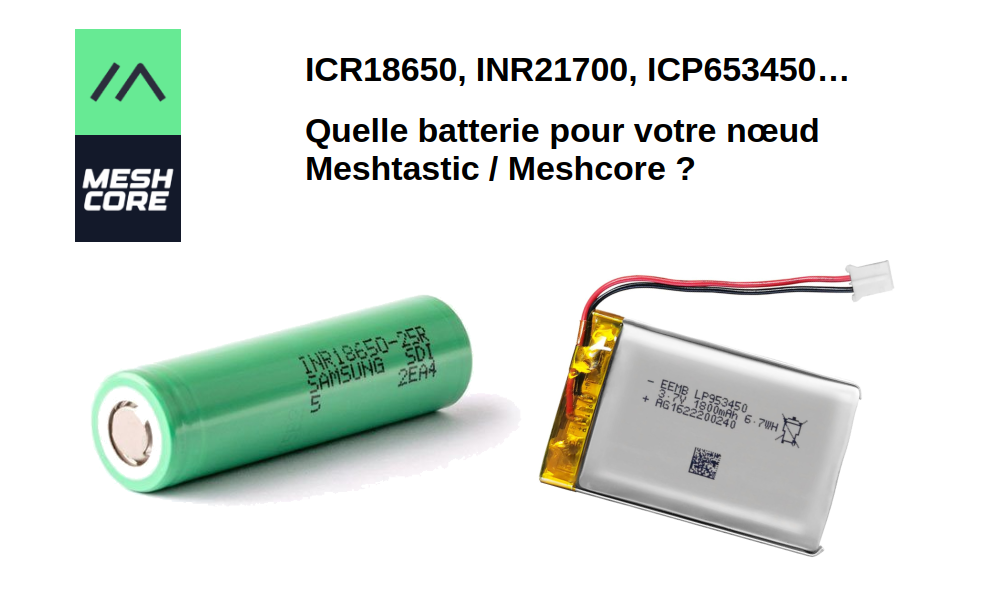
You have a Meshtastic or Meshcore node and you’re wondering which battery to choose to power it. This article is here to help you choose the one that best suits your needs.
1. Node type
The requirements vary significantly depending on the type of node used.
Standalone nodes acting as repeaters or routers consume more power. Therefore, a high-capacity battery is essential to maximize their autonomy. Often powered by a solar panel, they also require careful attention to battery chemistry to prevent damage when exposed to high temperatures.
Portable nodes acting as clients or companions must remain lightweight while offering approximately a day’s battery life. The battery size then becomes a critical factor, as it must fit inside the node’s casing.
2. Format
The three most common battery formats are:
Cylindrical format: As their name suggests, these batteries resemble cylindrical cells. The best-known models are the 18650 (*).
Pouch format: These batteries do not have a rigid casing, only a thin aluminum sleeve. This makes them very light and compact. LiPo (Lithium Polymer) batteries generally use this format.
Prismatic format: These batteries have a rigid rectangular shape, often made of aluminum. High-capacity LiFePO₄ batteries generally use this type of format.
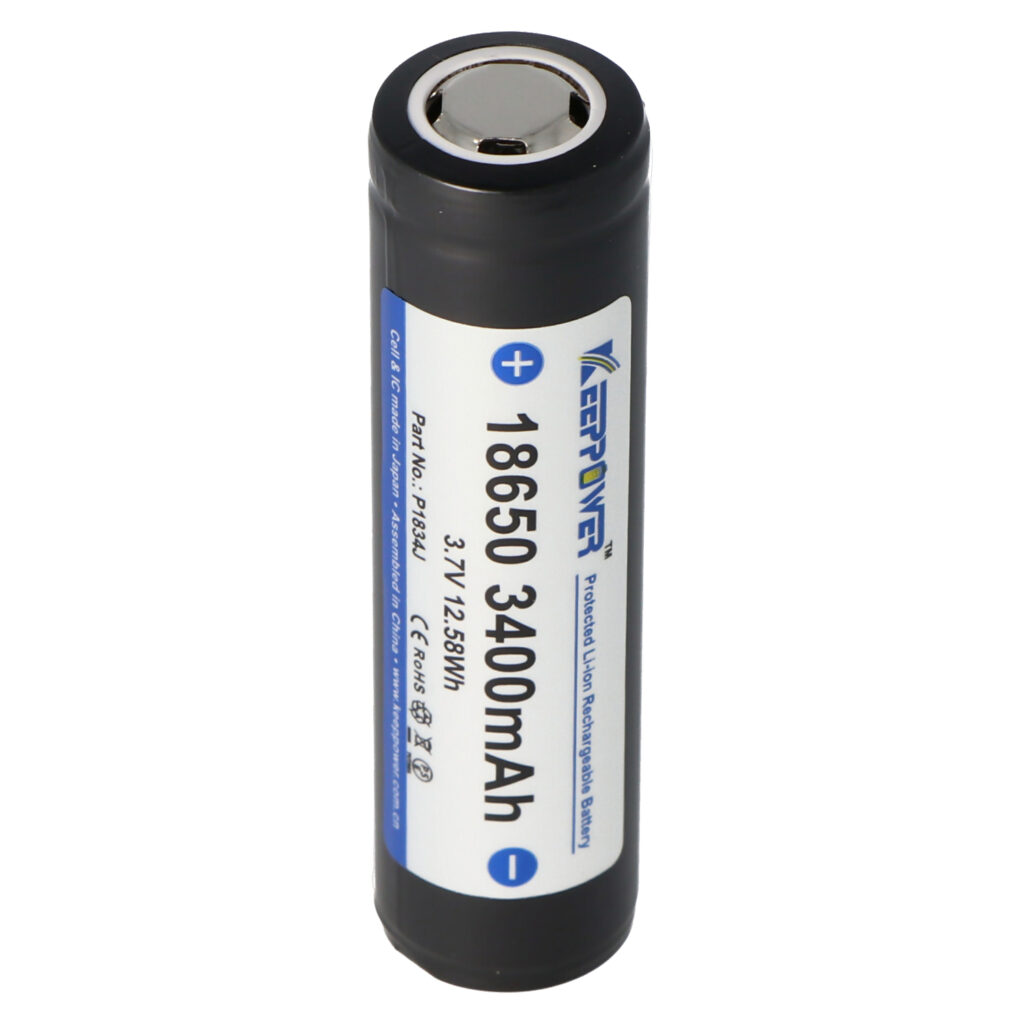
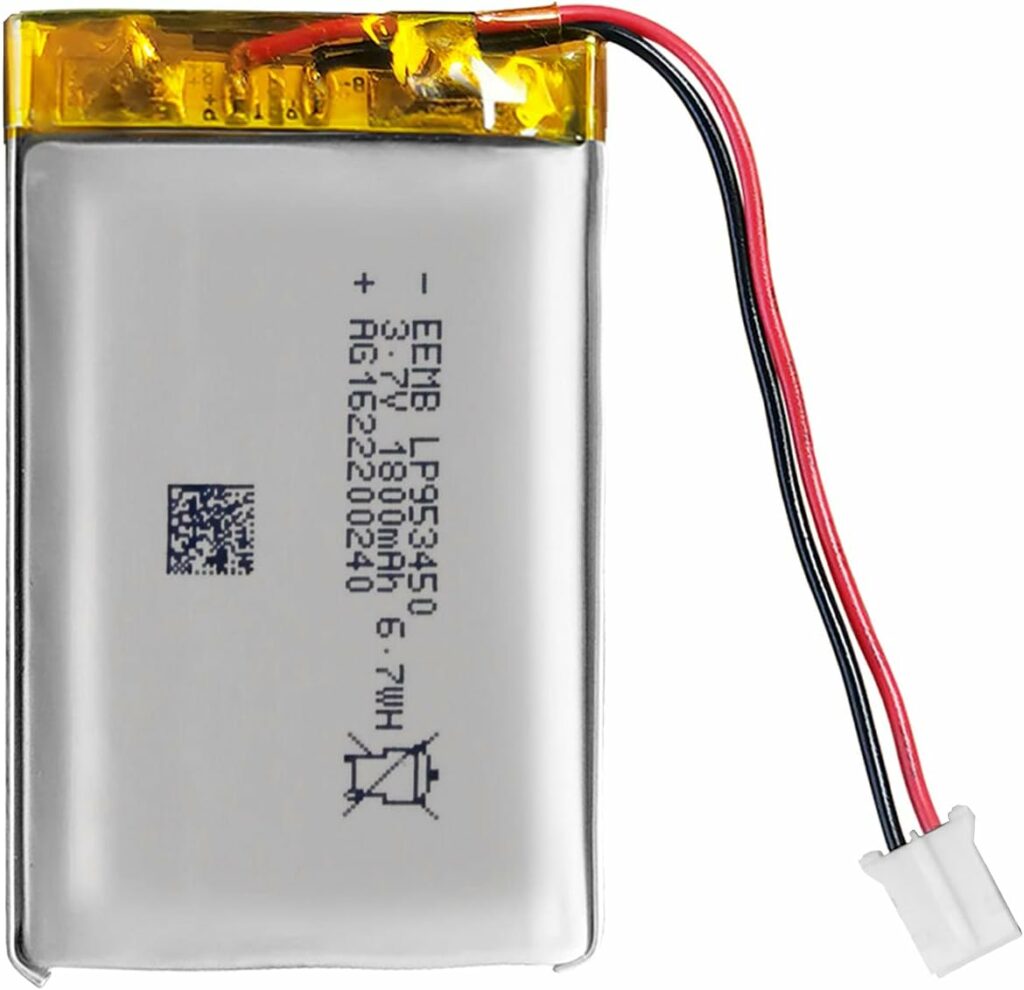
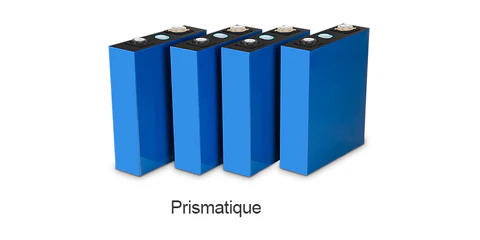
(*) Note: The famous “18650” batteries get their name from their size, not their chemistry. They are cylindrical batteries measuring approximately 18 mm in diameter and 65 mm in length.
3. Capacity
A battery’s capacity corresponds to the amount of electrical charge it can deliver. It is measured in Ah (ampere-hour) or mAh (milliampere-hour), representing the supply of current over a given time.
Quantity of electricity supplied (mAh) = Current (mA) × Time (h)
Example: A 3500 mAh battery can supply a current of 350 mA for 10 hours, or 35 mA for 100 hours.
Battery capacity depends on its chemistry and form factor. Each technology has its own energy density (capacity stored per unit volume or mass).
For example, a lithium-ion battery offers a density of approximately 250 Wh/kg. A lithium-ion battery in the 18650 form factor has a mass of approximately 50 grams and can store 250 x 0.050 = 12.5 Wh of energy. At a voltage of 3.7 V, this battery has a capacity of 12.5 / 3.7 = 3.37 Ah, or 3370 mAh.
Using batteries in parallel to increase the total capacity
It is possible to use several batteries in parallel to increase the total capacity, but the following precautions must be observed:
It is essential to use batteries with the same characteristics (voltage, capacity, chemistry, age, and wear level). Therefore, it is strongly recommended to use new, identical cells purchased at the same time.
Before soldering them or inserting them into a holder, you must verify that they have the same voltage (within ±0.05 V). If this is not the case, they must be charged individually until their voltages equalize.
Why this precaution?
If batteries connected in parallel have different voltages, a very high current can flow from the more charged batteries to the more discharged ones. This current is limited only by the low internal resistance of the batteries and the connecting wires.
A mere 0.2V difference can generate a current of several amps, causing significant overheating and damaging your batteries. The consequences can be even more serious, with a risk of fire, especially with LiPo batteries.
As we will see later, it is strongly recommended to use a battery protection circuit. However, in this specific case of using batteries in parallel, only one BMS (Battery Management System) should be used for the entire group. This should be done after ensuring that the batteries are identical and connected only after their voltages have been equalized.
4. Voltage
The voltage delivered by a battery depends on its chemistry.
Several voltage values are available for the same chemistry:
- Nominal voltage: average reference value, used for energy calculations (Wh).
- Fully charged voltage: maximum voltage of the battery when fully charged.
- Cut-off voltage: minimum threshold that must not be exceeded to avoid damaging the battery.
A battery based on lithium-ion chemistry offers a nominal voltage of 3.7 V, a cut-off voltage of 3.0 V, and a voltage of 4.2 V when fully charged.
A battery based on LiFePO₄ chemistry offers a nominal voltage of 3.2 V, a cut-off voltage of 2.5 V, and a voltage of 3.6 V when fully charged.
5. Discharge current
The maximum discharge current a battery can deliver depends on several factors:
- its chemistry (LiFePO₄ can handle very high currents, lead-acid much less so)
- its internal resistance (the lower the resistance, the higher the current it can deliver)
- its design (a “power” battery delivers more current than a “energy” battery)
- its state of charge (a fully charged battery delivers more than a nearly discharged one)
- its temperature (cold reduces the maximum current)
The maximum current a battery can deliver is indicated in its technical documentation. Two values are generally distinguished:
Maximum continuous current: the value the battery can continuously handle.
Peak current: the value the battery can handle for a few seconds (often 2 to 3 times the continuous current).
Example: two 18650 batteries with very different maximum discharge currents:
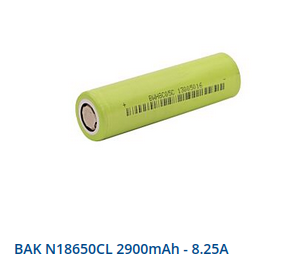
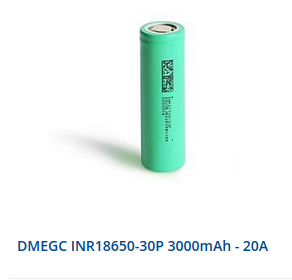
Warning: Exceeding the maximum current of a battery can cause overheating, accelerated degradation, or even a fire (especially with LiPo batteries).
6. The different chemistries of Lithium-ion
All lithium-ion batteries operate on the same principle: lithium ions move between a positive and a negative electrode. However, the chemical composition of the positive electrode makes all the difference: capacity, safety, discharge current, lifespan, etc.
Here are the five main chemistries found in common batteries (particularly in the 18650 format):
- ICR – Lithium Cobalt Oxide (LiCoO₂): This offers good capacity but limited safety. It is the least thermally stable; overheating or overcharging can be dangerous.
- NMC/NCR – Lithium Nickel Manganese Cobalt (LiNiMnCoO₂): This offers good capacity and enhanced safety compared to ICR.
- IMR – Lithium Manganese (LiMn₂O₄): This offers high power (high current) and safety at the expense of maximum capacity.
- INR – Lithium Nickel Manganese (optimized version): This is an evolution of IMR offering greater capacity.
- IFR – Lithium Iron Phosphate (LiFePO₄): This is the safest chemistry of all. It almost never burns, even in the event of shock or overheating. Its nominal voltage is lower (3.2 V instead of 3.7 V).
Here is a table that compares the characteristics of 18650 batteries based on their chemistry:
| Technology | Capacity | Voltage | Security |
|---|---|---|---|
| ICR (LiCoO₂) | ★★★★☆ 2600–3500 mAh | 3.6–3.7 V | ★★☆ |
| NCR / NMC (LiNiMnCoO₂) | ★★★★☆ 3000–3600 mAh | 3.6–3.7 V | ★★★ |
| IMR (LiMn₂O₄) | ★★★☆☆ 1500–2500 mAh | 3.6–3.7 V | ★★★★ |
| INR (NMC haute puissance) | ★★★★☆ 2500–3500 mAh | 3.6–3.7 V | ★★★★ |
| IFR (LiFePO₄) | ★★☆☆☆ 1500–2500 mAh | 3.2 V | ★★★★★ |
7. NiMH batteries
NiMH batteries are most often found in the form of standard AA or AAA rechargeable batteries. Their main advantage over lithium batteries is their excellent cold resistance: they can be charged and discharged in sub-zero temperatures, down to -20°C, or even lower for some models.
Their nominal voltage is 1.2 V per cell. To obtain a voltage compatible with Meshtastic or MeshCore nodes (generally 3.3 V to 5 V), three cells must be connected in series, providing a nominal voltage of 3.6 V.
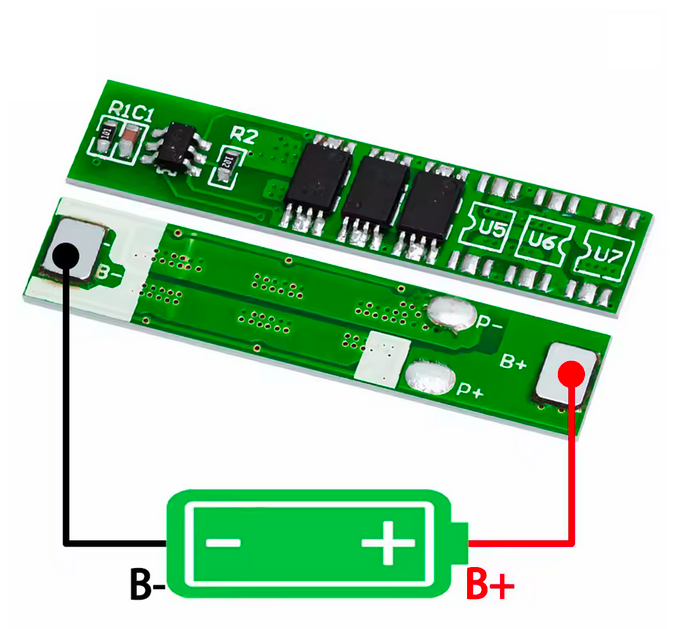
8. Protection circuit
Lithium-ion batteries require a protection circuit, often called a BMS (Battery Management System) or PCM (Protection Circuit Module).
The role of this circuit is to protect the battery against overcharging, over-discharging, overcurrent, short circuits, deep discharge, and sometimes excessive temperatures.
This circuit is particularly important for “bare” LiPo batteries, which generally do not have any built-in protection.
Without this type of protection, a lithium battery can degrade rapidly, overheat, or become dangerous if misused.
9. LiPo battery connectors
Small LiPo batteries are generally equipped with a 2-pin JST connector.
Low-capacity LiPo batteries (e.g., 800 mAh) have a micro JST connector with a 1.25 mm pitch (distance between the center of each pin). The part number for this connector is JST GH1.25-2 (1.25 mm pitch, 2 pins).
Higher-capacity LiPo batteries (e.g., 2500 mAh) have a JST connector with a 2 mm pitch. The part number for this connector is JST PH2.0-2 (2 mm pitch, 2 pins).
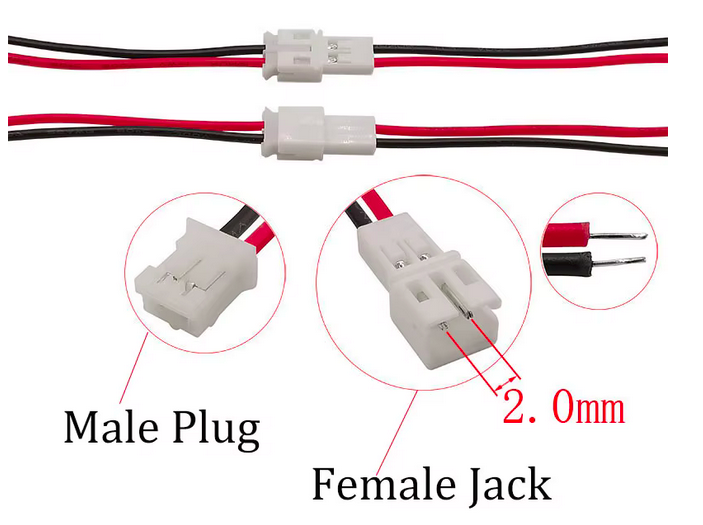
Here are the different references depending on the pitch:
| JST | Pitch (mm) | Maximum current (A) |
|---|---|---|
| SH | 1.0 mm | 1 |
| GH | 1.25 mm | 1.5 |
| ZH | 1.5 mm | 2 |
| PH | 2.0 mm | 2 |
| XH | 2.54 mm | 3 |
For high-capacity LiPo batteries (e.g., 3000 mAh and above) or those capable of delivering high currents (drones, RC cars, etc.), the small JST connectors are no longer suitable. XT connectors, specifically designed for high currents, are used instead. For Meshtastic nodes, this XT connector is not necessary because the currents are very low. However, it is possible to use an XT-to-JST adapter cable to connect this type of battery to your nodes.
10. IEC61960 standard
According to IEC 61960, the code consists of three letters indicating the chemistry, followed by numbers giving the main dimensions in millimeters.
The first letter designates the material of the negative electrode (e.g., I for lithium-ion, L for lithium metal), the second letter the material of the positive electrode (e.g., C for cobalt, N for nickel, M for manganese), and the third letter the cell shape (C for cylindrical, P for prismatic, R for round/pile).
This allows you to see the technology, geometry, and size of a battery at a glance.
Examples of codes:
- ICR18650: I = Lithium-ion, C = Cobalt (chemistry), R = cylindrical, 18650 = diameter 18 mm, height 65 mm
- INR21700: I = Lithium-ion, N = Nickel-manganese (chemistry), R = cylindrical, 21700 = diameter 21 mm, height 70 mm
- ICP653450: I = Lithium-ion, C = Cobalt (chemistry), P = prismatic, 653450 = thickness = 6.5 mm, width = 34 mm, height = 50 mm
Batteries are not always identified according to this standard. For example, many LiPo batteries on the market have a reference number starting with LP, which stands for Lithium Polymer (LiPo), followed by its dimensions.
For example, the LP953450 battery below correspond à une batterie LiPo (LiPo = Li-ion avec technologie ICR et format poche généralement) d’épaisseur = 9.5 mm, de largeur = 34 mm et de hauteur = 50 mm.
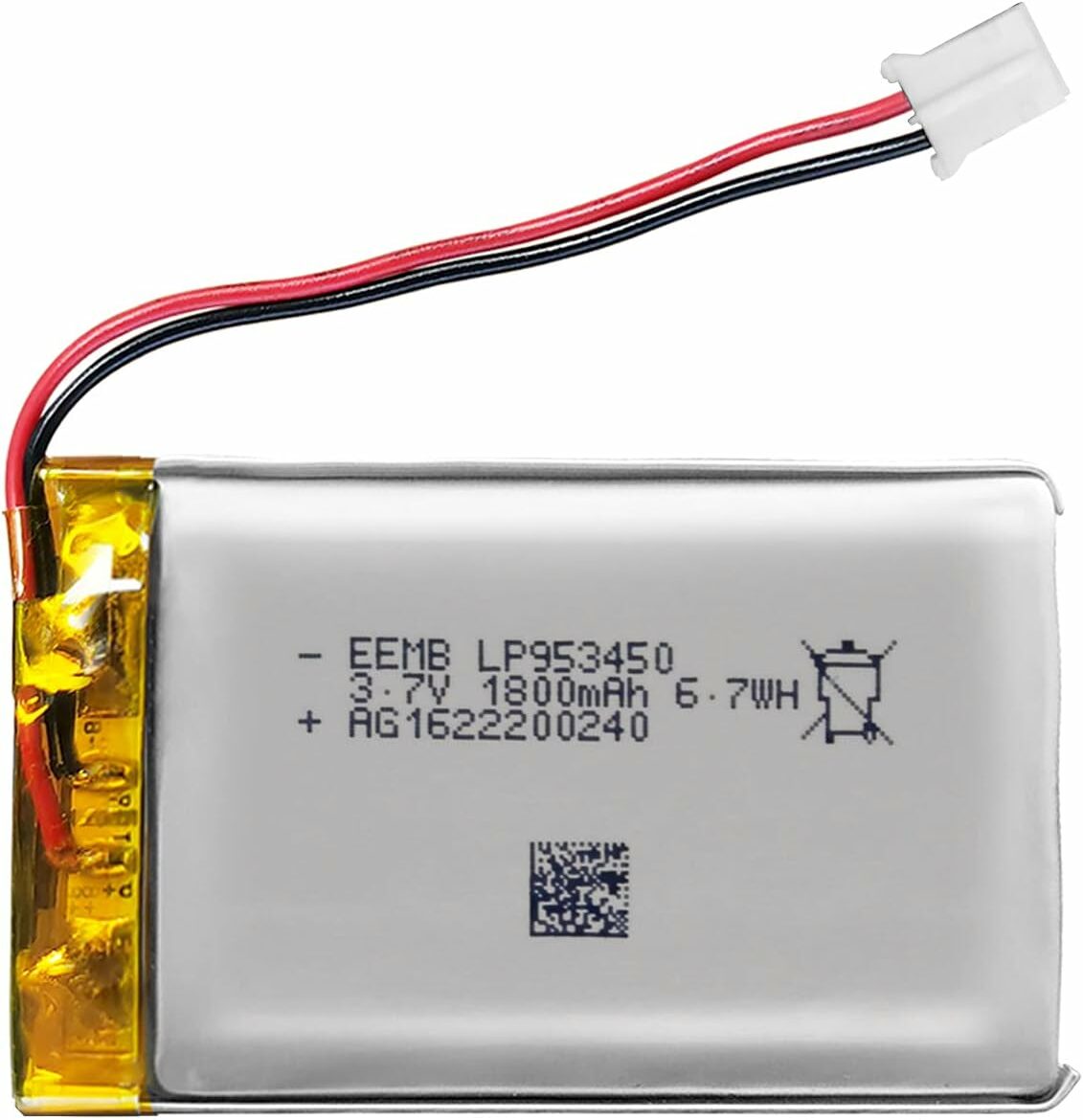
It is worth noting that its advertised capacity is 1800 mAh, its voltage is 3.7 V and it stores 6.7 Wh of energy (3.7 V x 1800 mAh).
Conclusion
I hope this article has helped you choose the right battery for your Meshtastic or Meshcore node. Here are two configurations I use for my Meshcore nodes:
For my standalone solar-powered node, I use three 2600mAh INR18650 Li-ion batteries. Connected in parallel, they provide a total capacity of 2600 x 3 = 7800mAh. This offers a good balance of battery life with my solar charger and the necessary protection against sun exposure.
For my portable node (Heltec V3), I use a small 2500mAh LP103450 LiPo battery. This was chosen for its compact size to fit inside the housing and its relatively light weight.